







An estimated 7.4 million Americans are living with Alzheimer's, according to the Alzheimer's Association's 2026 Facts and Figures report, a number projected to reach nearly 13 million by 2050. Finding activities that are genuinely enjoyable at every stage matters. The right puzzle can do a lot: spark a conversation, provide quiet satisfaction, give someone a moment of real independence. The wrong one ends in frustration within minutes.
This guide covers nine of the best puzzles for people living with dementia, from 100-piece jigsaws suited to early stage through to 13-piece options for mid-to-late stage. Each entry includes honest guidance on who it suits best and where it falls short.
Best Puzzles for Dementia at a Glance
Not sure which stage applies? Take Relish's Find Your Stage quiz before browsing.
|
Stage |
Puzzle |
Best for |
|---|---|---|
|
Early |
Satisfying in-box solo challenge |
|
|
Early |
Group puzzling at a table |
|
|
Early |
Premium wooden experience or gift |
|
|
Mid |
Dementia with visual impairment |
|
|
Early-to-mid |
Gentle solo challenge |
|
|
Early-to-mid |
Gift presentation and variety |
|
|
Early-to-mid |
Word-based or portable activity |
|
|
Mid-to-late |
Confident, independent completion |
|
|
All stages |
Buying from a dementia specialist retailer, 13 to 100+ pieces |
What to Look for in a Dementia-Friendly Puzzle
The right puzzle depends on where someone is in their dementia journey and what they find satisfying. A few specific considerations make the difference between a dementia-friendly activity and one that gets left to gather dust:
-
Piece count matched to stage. Early stage: 63 to 100 pieces. Early-to-mid: 35 pieces. Mid-to-late: 9 to 13 pieces. Too many pieces create frustration; too few remove the sense of achievement.
-
Large, clearly distinct pieces. Pieces that are easy to pick up and orient reduce dexterity barriers and keep the focus on the enjoyment, not the mechanics.
-
Familiar, high-contrast imagery. Nostalgic scenes: rural landscapes, animals, small-town life. These tend to spark conversation and recognition more reliably than abstract designs.
-
In-box completion. Puzzles designed to be completed inside the box lid can be used anywhere and stored without pieces going missing.
-
No dementia labeling on packaging. A puzzle that arrives without any reference to memory loss makes a dignified gift.
The Best Puzzles for Dementia, Seniors and the Elderly
Finding the right puzzle for someone living with dementia takes more than picking the prettiest picture. The nine options below cover different stages, piece counts, formats, and budgets. Each entry shows who it suits best and where its limits lie.
Relish 100-Piece Puzzle: Best for Early Stage Dementia and Group Puzzling

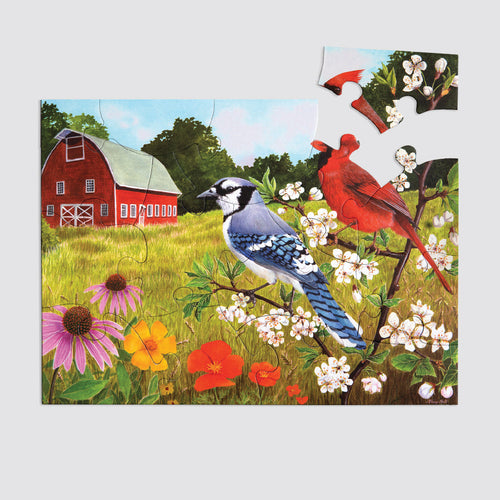
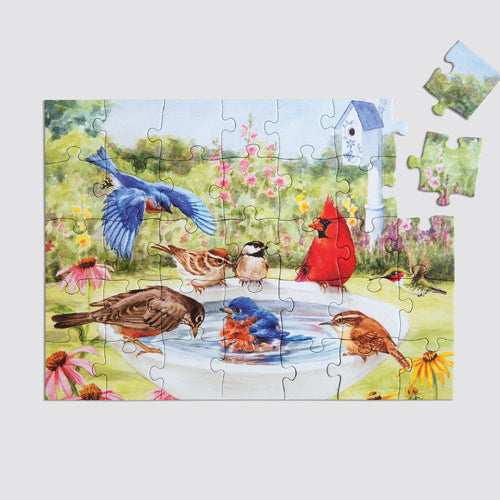
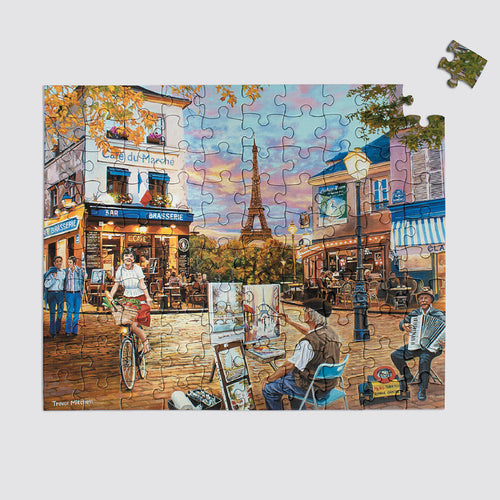
Relish's 100-piece puzzle range, including the charming Farm Life design, is the largest in the Relish jigsaw collection. Pieces are about 1.4 inches wide, and the finished puzzle is too large for in-box completion, so it is a table puzzle for a longer or group activity. For someone in the early stages of dementia, or for seniors without dementia who want a jigsaw with large pieces and nostalgic imagery, 100 pieces offers a genuinely satisfying challenge.
Group puzzling is where this size shines. Working side by side with a family member or caregiver provides connection without requiring conversation to flow continuously. Everyone has something to focus on, and something to celebrate when the last piece goes in.
Best features
-
100 pieces for extended engagement, suited to early-stage dementia and seniors who want more challenge than the smaller Relish ranges offer
-
Group-friendly format, making it one of the better options for puzzling with family at a table
-
High-contrast nostalgic imagery across all Relish designs, tested for visual accessibility
Best for
People in the early stages of dementia, particularly those who enjoy a table-based activity with family. Also well-suited to mentally sharp seniors who want larger pieces featuring familiar countryside imagery.
Not ideal for
Mid stage or later. The piece count and non-in-box format make this a poor fit for someone who needs quick wins or portable puzzling. Move to the 35-piece or 13-piece ranges as things change.
Buy the Farm Life 100-piece puzzle on the Relish store for $24.99
Relish 63-Piece Puzzle: Best for Early Stage Dementia Solo Challenge

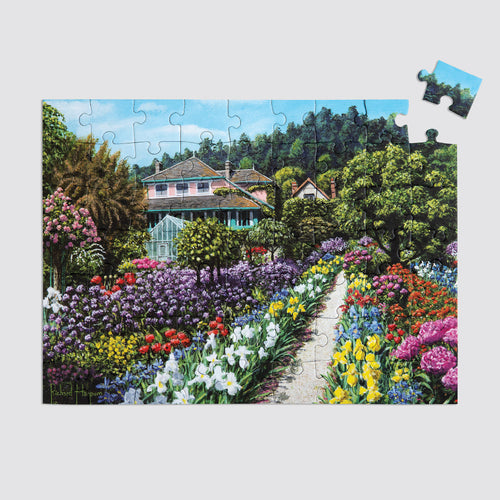
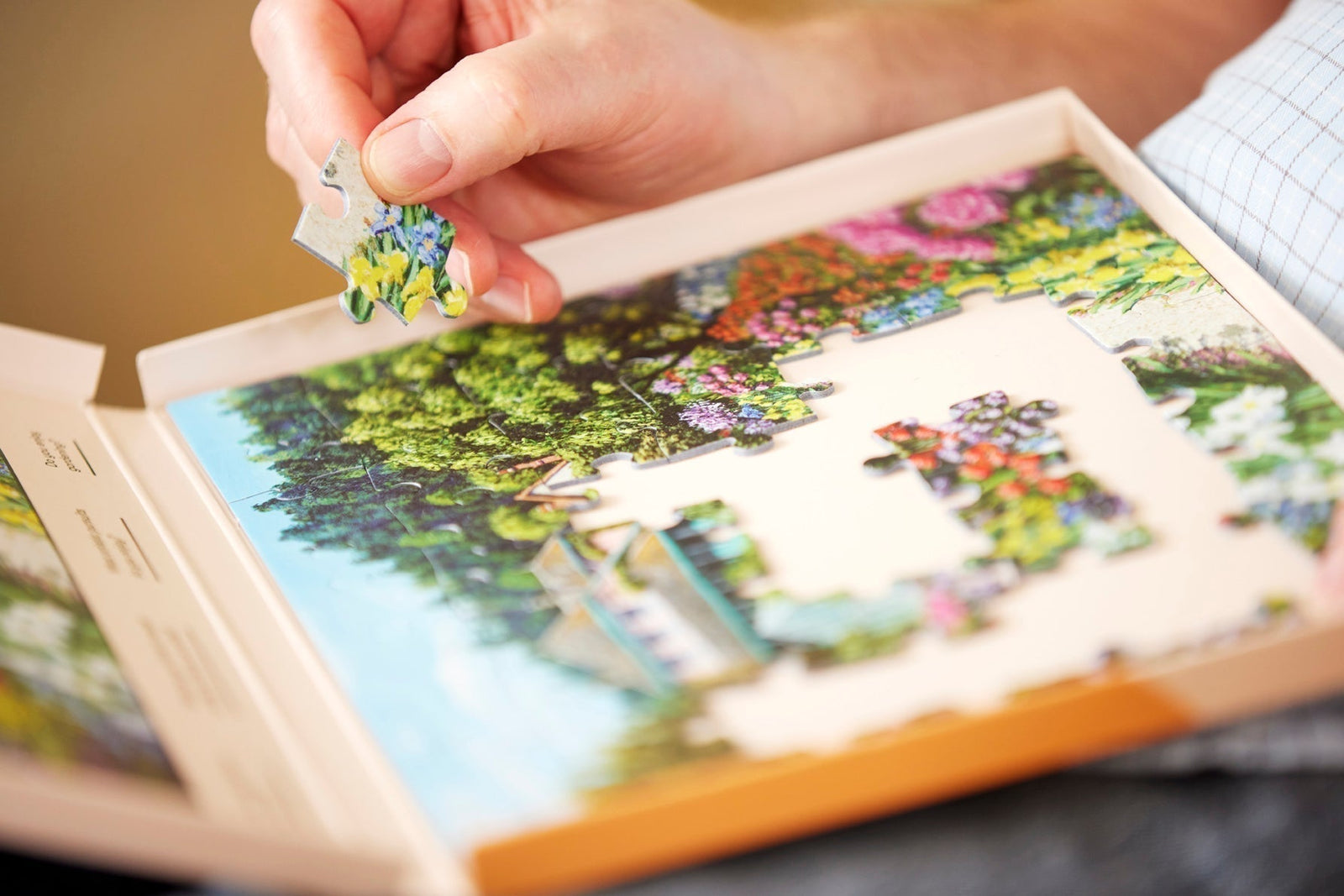
Relish's 63-piece puzzle range is one of the more challenging options for solo puzzling in the earlier stages. Cornwall's Wild Coast is one of several attractive designs available, all sharing the same format: pieces about 1.4 inches wide, cardboard construction, and a box lid that doubles as a frame so the puzzle completes inside it.
In the early stages of dementia, many people can still sustain focus for a longer session, and 63 pieces provide more engagement time and a stronger sense of achievement when the final piece clicks in.
A reference image on the box lid lets someone work through it on their own, and each piece is unique in shape. The range spans the Relish jigsaw puzzle collection, where designs are labeled by stage.
Best features
-
Completes inside the box, with the practical advantages of the smaller Relish sizes at a higher piece count
-
Stronger sense of completion from a longer session, with more engagement time than the 35 or 13-piece ranges.
-
Conversation prompts included, for shared puzzling with family or a caregiver, and for solo use too
Best for
People in the early stages of dementia who still engage well with longer activities and find the 35-piece range too quick. The 63-piece is a good option when you have time to sit with someone, as well as for solo use.
Not ideal for
People who are beginning to find longer tasks frustrating or who leave activities unfinished. Step down to the 35-piece or 13-piece range as needs change.
Buy Cornwall's Wild Coast on the Relish store for $24.99
Wentworth Wooden Puzzles: Best for Early Stage Dementia or a Premium Gift
 Wentworth Wooden Puzzles makes its large-piece range for people with reduced dexterity and dementia in mind. Puzzles are laser-cut from 4mm sustainably sourced wood, with pieces that are substantial and satisfying to handle in a way cardboard alternatives are not. The large-piece range starts at around 40 pieces and spans most of their image catalog.
What distinguishes Wentworth from other wooden puzzle brands is the whimsical pieces: uniquely shaped pieces cut to match the image's theme, which add an element of surprise and tactile interest. The wooden format holds up to repeated use, which makes it practical as well as enjoyable.
Best features
-
4mm wooden pieces, more substantial and easier to handle than standard cardboard, particularly for people with dexterity difficulties
-
Large-piece range starting at around 40 pieces, suitable for early-stage dementia upwards
-
Whimsy-shaped pieces that add tactile interest and make each puzzle more memorable
Best for
People in the early stages of dementia or mentally sharp seniors who enjoy the feel of quality materials. Wentworth is also one of the stronger puzzle gift options for people who have previously enjoyed jigsaws and appreciate craftsmanship.
Not ideal for
People who need in-box completion or very low piece counts for mid-to-late stage dementia. Wentworth's large-piece minimum makes their range unsuitable below early stage.
Buy Wentworth's large-piece puzzles on the Wentworth store from $18.00
Alzstore Wooden Tray Puzzles: Best for Dementia with Dexterity or Visual Impairment

Alzstore's hand-crafted wooden puzzles run 24 to 48 pieces and are built specifically for adults with dementia, stroke recovery, or reduced fine motor control. The wooden pieces sit noticeably thicker and larger than a standard cardboard jigsaw, a deliberate choice for people who find smaller pieces hard to distinguish or pick up, and each puzzle comes with its own tray to keep the activity contained.
Imagery across Alzstore's puzzle range favors clear, uncluttered scenes with age-appropriate subjects rather than busy or abstract designs, which keeps the visual load manageable for someone with limited eyesight as well as memory changes.
Best features
-
Large wooden pieces developed for adults with dementia, stroke, or dexterity limitations who find standard cardboard pieces hard to handle
-
24 to 48-piece range, covering mid-to-late through to early-to-mid stage in one product line
-
Included tray keeps the puzzle contained during and between sessions
Best for
People living with dementia who also have limited dexterity or vision, where even a standard large-piece cardboard jigsaw feels difficult to manage. The wooden format holds up better to repeated handling.
Not ideal for
People who want in-box completion in the Relish style, or a word-based activity as well as jigsaws. Alzstore's puzzles are sold individually rather than as a themed, stage-labeled collection.
Buy the wooden tray puzzles on Alzstore for $29.95
Relish 35-Piece Puzzle: Best for Early-to-Mid Stage Dementia

Relish's 35-piece puzzle range is aimed at people in the early-to-mid stages of dementia who are ready for a longer sit and want to finish on their own. Steam Train is one of several nostalgic prints, all sharing pieces about 1.8 inches wide, cardboard construction, and in-box completion so they stay neatly contained throughout.
Like all Relish jigsaws, the image is printed on the box lid to act as a guide, and each piece is unique in shape. Nostalgic imagery: country railways, small-town scenes. These give familiar subjects to focus on and talk about without having to force conversation.
Best features
-
Completes inside the box, keeping pieces together and allowing puzzling in any comfortable space
-
Large pieces, manageable for people with mild dexterity difficulties at this stage
-
Nostalgic imagery designed to prompt natural conversation and recognition
Best for
Someone in the early-to-mid stages of dementia who still enjoys a quiet solo activity with a satisfying end point. The 35-piece count gives enough engagement to feel like an achievement without becoming too demanding to sustain.
Not ideal for
People in the mid stages may find 35 pieces difficult to complete without support. Move to the 13-piece range if the person shows frustration before finishing, or needs a quicker win from the activity.
Buy Steam Train on the Relish store for $24.99
Wentworth Collectible Gift Sets: Best for Early-to-Mid Stage Dementia Gifting

Wentworth takes a different approach to dementia-friendly gifting with its Collectible Gift Sets: four individually titled and boxed wooden puzzles, presented together in a premium gift box. It suits people who appreciate a properly gifted product rather than a plain box, and gives a family member or caregiver a set to work through over several sessions instead of a single puzzle.
Individual Wentworth large-piece puzzles start around $18.00; the four-puzzle Collectible Gift Sets typically run $88 to $135 depending on the theme, with individually boxed puzzles inside so pieces from different puzzles never get mixed up.
Best features
-
Four individually boxed puzzles in one gift set, providing variety across a longer period without needing to source multiple products
-
Premium presentation box, the kind of gift someone can give without it looking clinical or medical
-
Wooden construction throughout, holding up to repeated handling better than cardboard
Best for
Family caregivers and adult children looking for a gift that presents well and covers multiple sessions. A strong choice for birthdays and holidays when both the recipient and the moment of giving matter.
Not ideal for
People who need a piece count below Wentworth's large-piece minimum for a later stage of dementia, or who want Relish's broader range spanning 13 to 100 pieces.
Buy a Wentworth Collectible Gift Set on the Wentworth store for $88 to $135
Relish Wordsearch: Best for Early-to-Mid Stage Dementia Word Puzzles
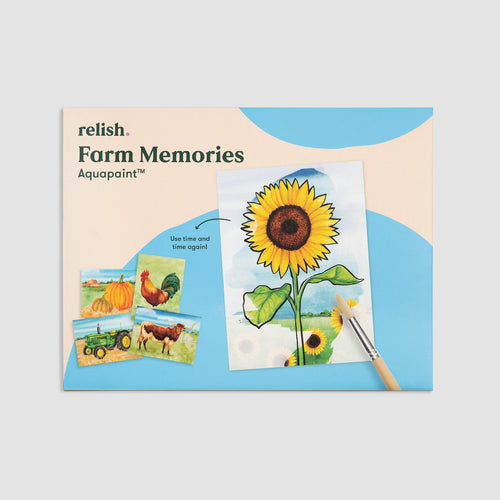
 The Relish Wordsearch is the only product in Relish's dementia-friendly word puzzles range, and it fills a genuine gap. The book contains 60 word searches across two difficulty levels. Level 1 uses an 8x8 grid with larger letters. Level 2 uses a 14x14 grid with smaller letters. Both use large, clear fonts and high-contrast layouts.
Starting at Level 1 and progressing to Level 2 as confidence builds means the book stays useful rather than becoming redundant after a few sessions. Familiar and nostalgic themes across the word searches tend to prompt memories and conversation while the person works.
Best features
-
60 puzzles across two levels, giving extended use without needing to repurchase
-
Large, legible fonts designed and tested with people living with dementia for clear, easy reading.
-
Portable format that works in a bag, at an adult day program, or on a waiting room chair as easily as at home
Best for
People living with dementia in the early-to-mid stages who prefer words to pictures, or who want a lighter activity that is easier to pause and return to than a jigsaw. It works well as a morning activity alongside a cup of coffee.
Not ideal for
Mid-to-late stage dementia, where the visual density of a word grid becomes too demanding. Switch to the 13-piece range at that point.
Buy the Relish Wordsearch on the Relish store for $14.99
Relish 13-Piece Puzzle: Best for Mid-to-Late Stage Dementia
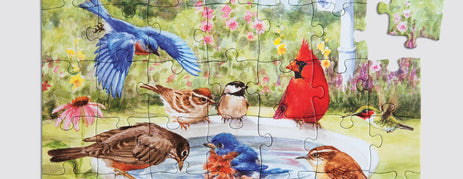
Relish's 13-piece puzzle range is designed for people in the mid stages of their dementia journey. Lily Pond is one of several beautiful designs available, each with pieces approximately 4 inches wide, all uniquely shaped, and large enough to handle with reduced dexterity. The finished puzzle completes inside the box, so it works at a bedside table, in an armchair, or on a lap tray without needing a cleared surface.
The image on the box lid provides a reference throughout, and pieces are all different shapes, meaning they can be assembled by feel as well as sight. There is no mention of dementia or aging on any of the boxes, making the range a gift someone can receive with dignity.
Best features
-
Completes inside the box, so it works wherever the person is comfortable, with no pieces getting lost between sessions
-
Pieces approximately 4 inches wide, easy to pick up for people with reduced grip or dexterity
-
No dementia labeling on packaging across the range, which matters when giving as a gift
Best for
The 13-piece range suits people in the mid stages of dementia who can still finish an activity on their own but need a lower piece count to get there with confidence. If finishing it on your own and getting that sense of achievement are what you are looking for, this is the size to choose. You can complete it yourself. It fits in a bag.
Not ideal for
People in the early stages of dementia looking for a more extended challenge will find 13 pieces too quick. For early stages, the 35-piece or 63-piece range from the Relish jigsaw puzzles collection is a better fit.
Buy Lily Pond on the Relish store for $24.99
Alzstore: Best for Buying from a Dementia Specialist Retailer
Alzstore is a long-established US retailer focused entirely on Alzheimer's and dementia products, and its puzzle range covers 13 to 100-plus pieces, including cardboard tray puzzles, wooden puzzles, and sound puzzles for extra sensory feedback. Buying from a specialist like this means every product on the page has been selected specifically with dementia and cognitive decline in mind, rather than adapted from a general puzzle catalog.
Alzstore also features puzzle formats Relish does not, like puzzles that make sounds as pieces are placed, useful for people who respond well to extra sensory cues.

Best features
-
Range spans 13 to 100-plus pieces plus wooden and sound formats, covering more format variety than most individual brands
-
Every product curated specifically for Alzheimer's and dementia care rather than adapted from a general catalog
-
Sound puzzle option, useful for people who benefit from extra sensory feedback beyond sight and touch
Best for
Buyers who want a one-stop specialist retailer for dementia puzzles, or who need a format Relish does not carry, such as a sound puzzle or a wooden tray puzzle.
Not ideal for
Buyers who want Relish's conversation-prompt cards in every puzzle or a themed, stage-labeled collection under one brand. Alzstore's strength is format range and specialism, not editorial curation.
Buy from Alzstore for $24.99 to $29.95 depending on format
Which Puzzle Works Best as Dementia Progresses?
The right puzzle changes as dementia progresses. Matching piece count to current ability keeps puzzling enjoyable rather than frustrating, and it is worth revisiting the choice every few months.
Best Puzzles for Early Stage Dementia
People in the early stages of dementia can often manage 63 to 100 pieces with familiar, high-contrast imagery. The Relish 63-Piece Puzzle and Relish 100-Piece Puzzle both fit here, as does Wentworth Wooden Puzzles' large-piece range. Relish's Wordsearch is a strong word-based alternative at this stage for people who prefer it.
Best Puzzles for Early to Mid Stage Dementia
As dementia progresses, 35 pieces tends to be the sweet spot: satisfying to complete, short enough to finish in one sitting. The Relish 35-Piece Puzzle and Wentworth's Collectible Gift Sets are both built for this window.
Best Puzzles for Mid to Late Stage Dementia
At 13 pieces, someone can complete an entire puzzle in one sitting and feel the full satisfaction of finishing it. The Relish 13-Piece Puzzle covers this stage well; Alzstore's wooden tray puzzles are a good option for added dexterity support at this stage too.
When puzzles are no longer manageable, sensory and music activities provide more sustaining engagement. Relish's product range has plenty of options in both areas.
Frequently Asked Questions
How do I choose the right puzzle size for someone with dementia?
Match piece count to stage. Early stage: 63 to 100 pieces. Early-to-mid: 35 pieces. Mid-to-late: 9 to 13 pieces. Look for pieces at least 1.4 inches wide for easier handling, as well as the right piece count.
Relish's Find Your Stage quiz takes a few minutes and gives a clear starting point if you are unsure where someone is in their journey.
Are jigsaw puzzles good for people with dementia?
Yes. Puzzles provide gentle cognitive stimulation, a clear sense of achievement, and flexibility: they can be done alone or with someone. Completing a puzzle, watching the image come together piece by piece, gives a real sense of pride.
The key is matching piece count to current ability. A puzzle that is too hard creates frustration rather than enjoyment.
What is the best game for people with dementia?
It depends on the stage and what the person enjoys. Puzzles work well from early to mid stage; simpler card and matching games suit mid to late stage.
Relish's games collection covers board games, conversation games, and sensory activities across all stages if you are looking for options beyond jigsaws.
Are dementia puzzles covered by HSA or FSA?
Sometimes. Dementia-specific activity products are often treated as therapeutic aids rather than everyday toys, so many HSA and FSA plans will reimburse them when accompanied by a Letter of Medical Necessity from a physician. Rules vary by plan administrator, so it is worth checking directly before you buy if you plan to claim.
Finding the Puzzle That Fits
Choosing a puzzle for someone living with dementia is easier when you know their current stage and what matters most to them: whether that is finishing it on their own, a shared activity with family, or a word-based change from jigsaws.
Browse the full Relish jigsaw puzzle range for stage-labeled puzzles from 13 to 100 pieces, or take the Find Your Stage quiz for a guided recommendation.


