










Finding the right game can feel a bit tricky - whether it’s for yourself or someone you care for living with dementia. But it's worth it - our need for connection, joy, and purpose never goes away.
At Relish, we’ve spent years working with families and professionals to make sure each game we design is simple, dignified, and most importantly, fun! This guide will help you find the right game for each stage of dementia.
This guide features games from the Relish collection. We've designed each one specifically for people living with dementia, working alongside families, occupational therapists, and dementia specialists.
Relish’s Quick Picks for Best Dementia Games
Short on time? Here are our top recommendations for different stages of dementia:
|
Recommended Game |
Stage |
Why We Love It |
|---|---|---|
|
Early |
A calm, familiar puzzle that’s easy to dip into solo or together - a lovely, gentle way to stay engaged with words that’s satisfying without pressure. |
|
|
Early |
Group conversation board game with gentle prompts spark stories and smiles, making it easier to chat and share memories without putting anyone on the spot. |
|
|
Early-Mid |
A fun, low-pressure group game where familiar sounds do the prompting - it’s easy to play at your own pace, with plenty of “I know that one!” moments. |
|
|
Mid-Late |
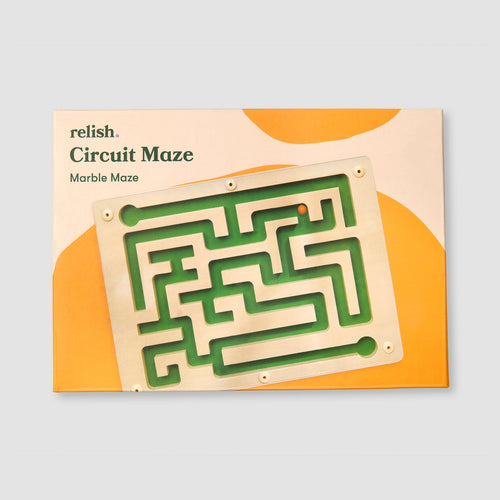
A soothing activity to keep hands busy and attention engaged as you tilt the board and guide the marble round the maze, great for calm focus when talking is a bit much. |
|
|
Late |
A soft, comforting, and quietly grounding tactile fidget aid, helping hands stay occupied with no “right way” to do it. |
Browse our full Dementia Games collection or take our Find Your Stage quiz to discover what might work best for where you are now.
How to Choose a Dementia-Friendly Game
Before you start, it helps to think and talk through a few things. Here's what to consider:
-
What's the goal today? Connection, calm, or gentle challenge?
-
Solo or together? Side-by-side with a puzzle still provides a connection.
-
Are there any accessibility requirements? Look for big pieces, high contrast, easy-grip textures.
-
Energy and timing: Mornings often suit puzzles, while afternoons suit gentler activities.
Remember, when it comes to it, the best game is the one that brings joy today. If something isn't landing, it’s perfectly fine to switch or stop for now.
Tips on What to Avoid
-
Complex strategy games with multiple rules
-
Time pressure or rushing
-
Unfamiliar games with new rules
-
Small pieces or low colour contrast
-
Physically demanding activities
Best Dementia Games by Stage
Here are our picks for the best games for each stage of dementia at a glance:
-
Early: Wordsearch Level 1 & 2, All About Us, Great Outdoors 100pc Puzzle
-
Early-Mid: Animal Snap, Musical Bingo
-
Mid-Late: Track Marble Maze, Puppy Playtime 13pc Puzzle, Snakes & Ladders and Ludo
Games for Early-Stage Dementia: Gentle Challenge and Achievement
In the early stages of dementia, most people can still tackle memory games, word games and jigsaws that require planning and problem-solving. A 2025 study found that playing board games in group settings improved conversation and verbal abilities in people living with dementia.
The key is choosing activities that are clearly laid out and feel purposeful rather than test-like. We’ve included some tips to help you get the most from each game.
Wordsearch Level 1 & 2
Best for: Quiet focus and familiar satisfaction

We've all done a wordsearch before, so you can jump straight in. Themes like seaside holidays, garden flowers, and classic films spark conversations as you search, especially if you pick a theme that resonates. "Oh, I remember that film!" "We grew those in our garden." Sometimes you'll tackle the whole puzzle, other times "let's find five words" feels just right.
Sixty puzzles split between two levels, depending on what feels manageable. Level 1 has larger letters and smaller grids for eyes that tire more easily. Level 2 offers more of a challenge if you're after it. The words only run in two directions rather than backwards or diagonally, which means you're finding them steadily as you search. The pages are thick enough that you can circle away without worrying about marking the next puzzle.
Lovely to do together with one person spotting words and the other circling them, swapping roles when eyes get tired or focus drifts. Or perfect for those quiet, independent moments with a cup of tea when you just want something gentle to focus on. The kind of activity that suits whatever mood or energy the day brings.
All About Us
Best for: Group fun, sharing life stories, and meaningful conversation

A board game built around conversation - cards organised by life decades, from childhood through to imagined futures. Questions like "What was your first job?" spark proper discussions rather than just yes-or-no answers. "What makes you laugh?" gets people sharing stories, debating, and remembering fond moments.
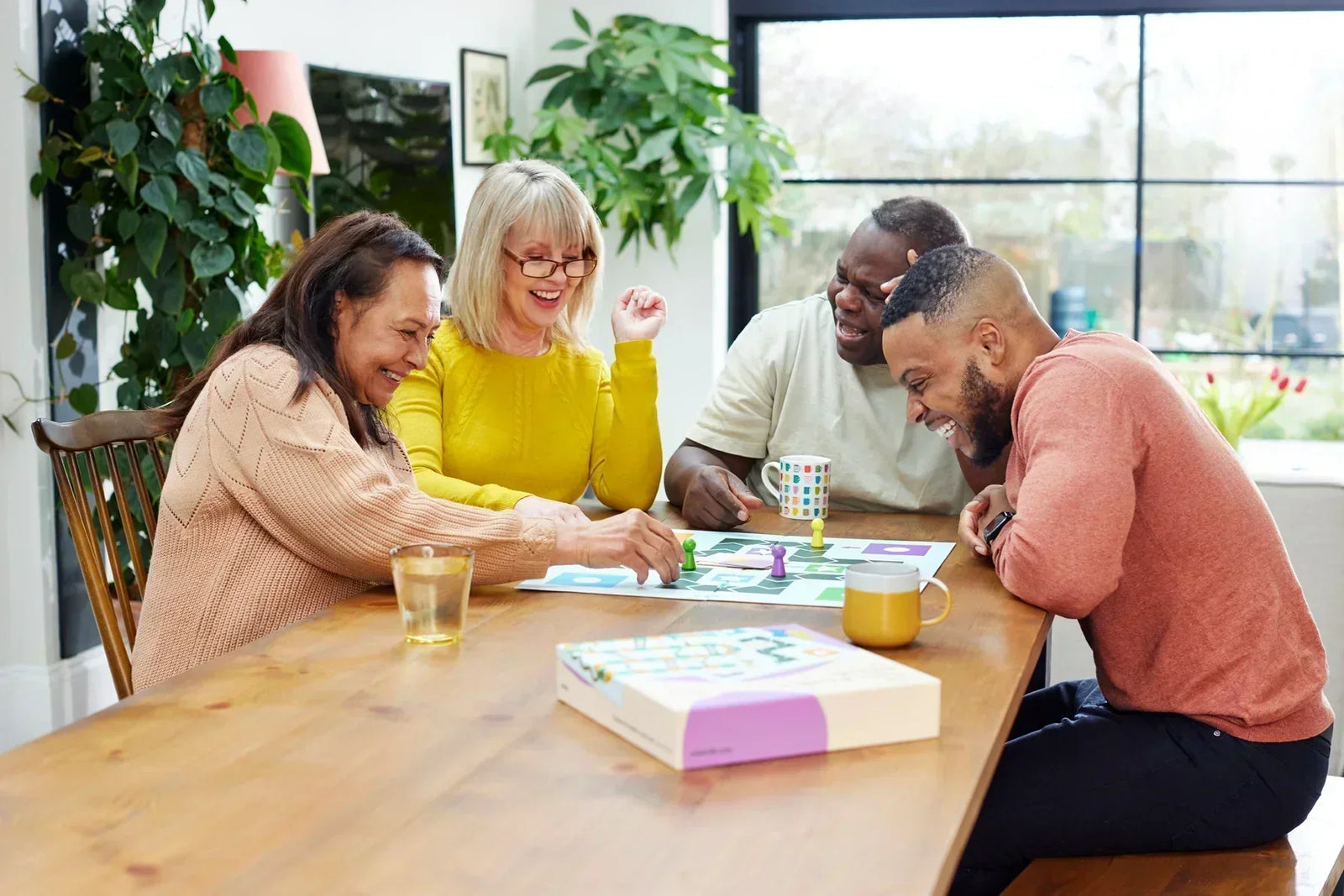
The cards are large and clear with vibrant colours. You can play it as a full board game with 2-4 players, using the dice and counters to move through the decades. Or skip the board entirely and just use the cards for conversation - whatever feels right.
Games can be as short as 10-15 minutes for a quick visit, though you’ll easily find you’ve spent an hour when everyone's engaged and chatty! Some families like to record or write down the stories that come up.
Great for family visits or group conversations in care homes.
Great Outdoors 100-Piece Puzzle
Best for: Purpose, achievement, and calm focus

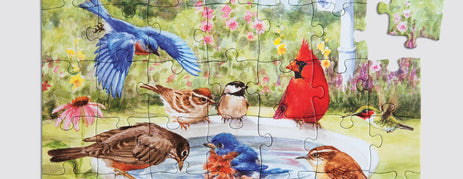
There's something deeply satisfying about doing a jigsaw - the feel of the pieces, watching the picture come together, seeing it finished. This one features a gorgeous lakeside camping scene at sunset: a gleaming caravan, crackling campfire, boats on the water, pine trees silhouetted against an orange sky. The kind of image that gets people talking about when they had a caravan just like that, or that time camping by the lake.
The pieces are chunky with clear sections - all that orange sunset sky, the dark trees, the shimmering water - so it’s easier to pick out what you're looking for. They're sturdy and fit together well, and the full picture on the box lid is there for when you need a bit of help.
Works brilliantly together - one person hunting through pieces, another fitting them in. Or leave it out on the table and come back to it whenever you fancy.
Shop for the Great Outdoors 100-Piece Puzzle here
Shop for our 100-piece puzzles here
Shop for our 63-piece puzzles here
Browse all of our Early Stage Dementia products here
Games for Early-Mid Stage Dementia: Connection, Conversation, and Confidence
At this stage, people often find conversation-led activities most engaging - games that spark stories, tap into long-term memory, and create natural opportunities for connection. Social play can be a fantastic part of your day, whether one-to-one or in small groups.
Animal Snap
Best for: Quick laughs and familiar fun

Everyone knows Snap, so you're playing within seconds. That moment when someone spots a match and shouts "snap!" - the laughter, the friendly scramble for the pile. The cards are thick and easy to grab, with bright animals everyone recognises: elephant, lion, penguin, giraffe.
If the speed feels too much, flip the cards slowly so everyone can follow along, or switch to Pairs instead - turning cards over to find matches at your own pace. There's also Full House where you collect sets of four. Use half the deck if you fancy a quicker game.
Musical Bingo
Best for: Group play and familiar sounds

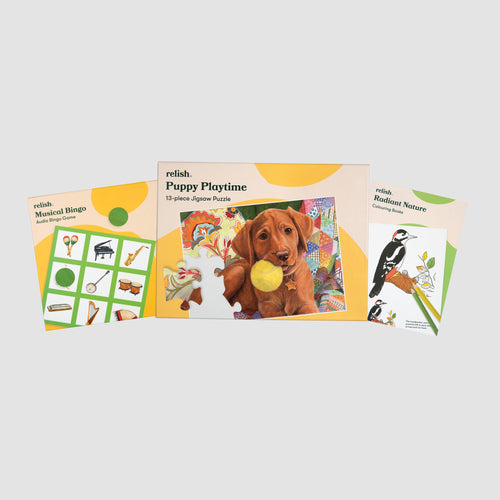
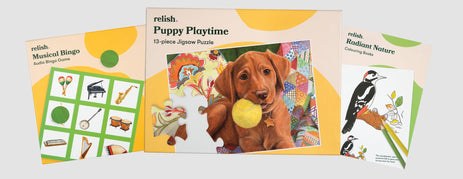
Listen for the sound - is that a trumpet? A piano? A violin? - then find the matching instrument picture on your card and cover it with a counter. That moment of recognition when you hear something familiar creates genuine excitement, and honestly it's worth celebrating every match along the way, not just whoever calls bingo first. The pleasure is in the moment of recognition as much as in the winning.
The CD plays instrument sounds that can be replayed as many times as needed, giving everyone time to listen properly and find what they're looking for. With 8 bingo cards and 92 coloured counters, it’s great for family gatherings - everyone gets involved, and you can adjust the volume for whoever needs it louder or softer.
It's the kind of game that often sparks memories and conversations between rounds, like "My brother played the clarinet," and "We had a piano just like that in our front room." Music creates connections beyond the game itself, which is really why it works so well.
Browse all of our Early-Mid Stage Dementia products here
Games for Mid-Late Stage Dementia: Sensory Prompts and Shared Play
At this stage, keeping things simple works best. Activities should lean on what you can see, hear, and touch, with very short chunks of time.
Track Marble Maze
Best for: Calming focus and gentle dexterity

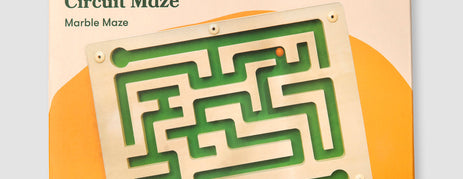
Tilt the maze left and the marble rolls left, tilt it right and it follows. There's something genuinely calming about watching the marble travel along the track, responding instantly to your hands. The repetitive motion, the gentle concentration required, the immediate feedback as the marble navigates the geometric path - it all creates a meditative quality that's surprisingly soothing.
It's a wooden frame with a clear perspex screen keeping the marble secure, lightweight with a brightly coloured marble that’s easy to follow as it travels through the track. The maze responds immediately to small movements, giving you complete control over the pace and direction. Some people spend five minutes with it, others pick it up and put it down throughout the day.
Works beautifully on your lap, on a table, or even in bed - wherever feels comfortable. The lightweight design means it's easy to hold for as long as you want, and because there's no right or wrong way to use it, there's no stress. Just the pleasant, calming motion of guiding the marble along its path.
Shop for Track Marble Maze here
Puppy Playtime 13-Piece Puzzle
Best for: Quick satisfaction and calm companionship

Finishing a puzzle in one sitting feels brilliant - that sense of completion, of seeing the whole picture come together under your hands. This one shows an adorable brown puppy with a tennis ball, sitting against a bright patchwork quilt background full of patterns and colours. The kind of image that makes people smile and often sparks stories about family pets.
Just 13 large pieces (around 10cm each, thick 2mm cardboard that's sturdy and easy to handle), with clear sections to help you see where things fit. The puppy's face, the yellow tennis ball, those colourful quilt squares - there's always a next step.
The corner and edge pieces naturally create a frame to work within, giving structure to the task, and the puzzle completes inside the box with the full picture on the lid for easy reference.
Shop for the Puppy Playtime 13-Piece Puzzle here
Shop for all of our 13-piece puzzles here
Snakes & Ladders and Ludo
Best for: Familiar games with clear visuals

Two games everyone knows, so there's less time spent explaining rules - just roll the dice, move your counter, climb a ladder, slide down a snake. The familiar rhythm comes back instantly, and within minutes you're caught up in the game, cheering for good rolls and groaning when you land on a snake. It’s simple, competitive fun that gets everyone involved.
The board's large and bright with strong colours, so it’s easy to see where everyone's going and whose turn it is. The counters are satisfyingly chunky and easy to hold, pick up and move around the board. Instead of tiny dice that roll off the table, there are 6 dice cards with clear numbers that you can shuffle and pick from (though if regular dice feel more natural, they work perfectly fine too!).
It’s loads of fun with up to 4 people round the table, whether it’s with family gathered for a visit or friends in the lounge. The reduced number of squares means games finish while everyone's still engaged, and you can always play another round if everyone’s still eager!
Shop for Snakes & Ladders and Ludo here
Browse all of our Mid-Late Stage Dementia products here
Late Stage: Sensory Comfort and Quiet Moments
These aren't dementia games in the traditional sense - they're sensory tools designed for comfort and calm. The focus shifts to touch, familiar repetitive motion, and gentle engagement.
Tactile Turn
Best for: Soft, soothing fidgeting

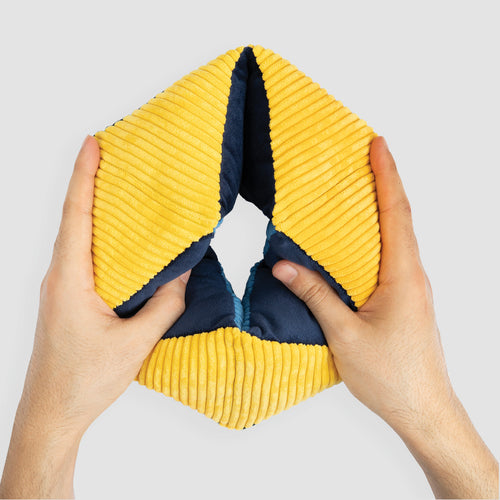
Soft fabric that flips and turns endlessly as you turn it, navy blue on one side and yellow on the other with different textures to engage the senses. The repetitive motion is calming - it’s something to hold, something to move, something that responds to touch without needing thought or effort. Some people flip it slowly, others find their own faster rhythm.
Lightweight enough to hold comfortably for long periods, and machine washable when needed. Designed with input from carers, care homes, and people living with dementia - the kind of extended collaboration that means it actually works in practice, not just in theory.
It’s the kind of thing that gets picked up throughout the day whenever their hands need something to do, providing comfort in a gentle, undemanding way.
Fidget Widget Toolkit
Best for: Variety of textures and movements

Five wooden widgets, each with a different motion. Roll has a ball that moves back and forth in a groove. Slide has beads that glide along a rod. Twist winds around a screw thread. Turn spins on its base. Spin has two pieces rotating around a central axis. The variety means there's usually something that feels right in the moment.
Smooth wood, comfortably sized, lightweight. The repetitive motions are calming and require no instructions or memory - just hands doing what feels natural. Each widget offers a different sensory experience to explore.
Developed with the Alzheimer's Society and University of Central Lancashire over 8 years of research and testing. Not just nice objects, but tools that people genuinely pick up, use, and find comfort in.
Shop for Fidget Widget Toolkit here
Browse all of our Late Stage Dementia products here
How to Adapt Games to Make Them Easier for People with Dementia
Games work best for people with dementia when they're familiar, visually clear, and there's no rushing. For example, research shows that playing board games in group settings, whether you’re at home or in a care home, can help spark conversations and provide a valuable brain workout.
What works best: Simple rules, high contrast pieces, big visuals, and games people remember from before like Snakes & Ladders, Ludo, or card games. No timers, no complicated scoring.
Ways to make games easier:
-
Remove scoring altogether or use a shared score that everyone builds together
-
Play in teams
-
Shorten games to one round or ten minutes rather than playing to the end
-
Reduce the number of cards or pieces in play
-
Use pointing or gentle verbal cues like 'your turn to roll'
-
Some days will feel right for a full game, other days finishing early is absolutely fine
Frequently Asked Questions
What games are good for someone living with dementia?
The best games are simple, clearly laid out, and match where you are now. Memory and word games work well in earlier stages, while sensory toys like fidget widgets and marble mazes suit later stages. Games like All About Us, Musical Bingo, and adapted jigsaw puzzles all create connection without feeling like a test. The key is choosing something that brings calm, confidence, or conversation - whatever feels right today.
Are board games good for dementia?
Yes – when they're familiar, easy-to-follow, with clear visuals and simple rules. Familiar games like Snakes & Ladders or Ludo, with clear visuals and simple rules, work great. Remove complicated scoring and play as a team rather than competitively. Research shows that playing board games in groups can improve verbal fluency and provide valuable cognitive stimulation. To make them easier, remove complicated scoring, play as a team rather than competitively, and keep the pace gentle.
What are good solo games for dementia?
Wordsearches, jigsaw puzzles (13-100 pieces depending on stage), marble mazes, and tactile widgets all work well for independent time. Solo activities provide value and purpose, and even when someone's doing a puzzle alone, sitting together in companionable silence still creates connection.
What are some free games we can play without buying anything?
We’ve put together a list of over 100 free, dementia-friendly activities you can explore right now! For something simple, try 20 Questions (think of a familiar person/place/food; ask yes/no questions) - and if it’s a bit much, make it easier with three choices or by playing as a team. You could also try Movie Time (a cosy “cinema night” with a familiar film and snacks) or Higher or Lower (a quick, easy card game that’s great for a giggle).
How do I know which stage we're in?
If you're not sure which stage feels right, our Find Your Stage quiz is a helpful starting point. It can point you in the right direction based on where you are now.
Finding What Works, Together
Choosing the best dementia game isn't about perfection. It's about showing up, trying things, and adapting. Dementia is unpredictable. What worked brilliantly last week might feel like too much today, and that's completely normal.
If putting the game away after five minutes for a cup of tea feels right, do it. Sometimes engagement looks like a full game, sometimes it’s just holding the pieces and having a natter. As long as you’re enjoying yourself, all of it counts!
If you’d like a few more gentle options to try, you can browse our entire dementia-friendly games collection here.


